House flipping Ontario rules have changed in recent years, making it important to understand the tax, legal, and financial details before starting a flip in Durham Region or the Greater Toronto Area.
Written by Satish Kumar, Licensed Mortgage Agent with Mortgage Architects (12728). Last updated November 1, 2026.
Quick answer
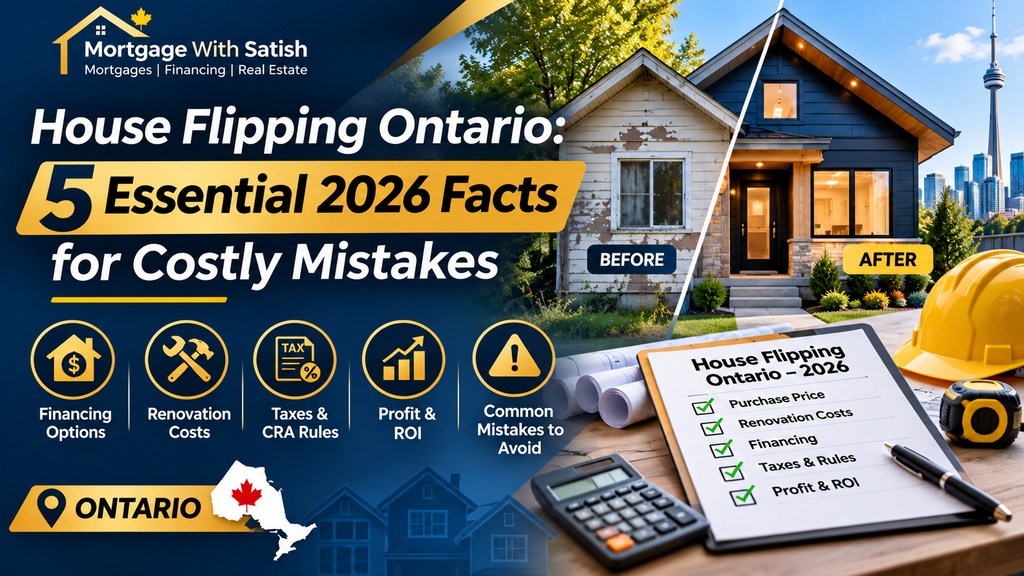
House flipping Ontario means buying, renovating, and quickly reselling a home for profit, but profits from most sales within 365 days will be fully taxed as business income under federal rules. Always budget for taxes, land transfer fees, and all costs before you start flipping in Ontario.
Key takeaways
- Profits from homes sold within 365 days in Ontario are usually fully taxable as business income.
- Life-event exceptions can apply, but do not assume they cover every quick resale.
- Banks, private lenders and mortgage rules may affect how you finance a flip.
- Ontario has additional land-transfer-tax issues for some vacant land transactions.
- Consult a tax professional for advice on your situation before selling or assigning a property.
What is house flipping Ontario and how does it work?
House flipping Ontario is buying a property, renovating it, and reselling it quickly for profit. To do it successfully, you need to calculate all costs, line up proper financing, and follow tax and legal rules.
Flipping is most commonly done by buying an undervalued or outdated house, making cost-effective upgrades, and listing it for sale usually within a year. The main steps include:
- Finding a suitable fixer-upper property
- Budgeting for renovations, closing, holding, and selling costs
- Financing the purchase and improvements
- Renovating to appeal to buyers in the local market
- Selling, ideally at a price that covers all your costs and delivers a profit
Recent changes to federal tax rules and Ontario’s land transfer requirements mean the risks and tax liabilities are higher than many first-time flippers realize.
What are the new tax rules for house flipping Ontario in 2026?
Since January 1, 2023, most quick resales of residential properties in Ontario are taxed as business income, not capital gains, if sold within 365 days of ownership. The principal residence exemption does not apply in these cases.
Specifically, the Canada Revenue Agency defines a “flipped property” as a home (including rental and pre-construction units) sold after being owned for less than 365 consecutive days. Profits are fully added to your taxable income. If you assign a pre-construction purchase before closing, the rule applies to that assignment too.
If you own the property for 366 days or more, the automatic flipping rule no longer applies—but the CRA can still treat your gain as business income if your overall pattern or intent resembles reselling homes for profit. Living in the home does not guarantee you’ll qualify for the principal residence exemption if you sell quickly or repeatedly.
Life event exceptions
Some quick sales may qualify for exceptions if the sale happens because of a personal event such as death, divorce after a 90-day separation, serious illness or disability, job loss, eligible relocation, insolvency, expropriation, or a threat to safety. In these situations, you may avoid the business income rule, but the facts must clearly fit one of the specific events. Document everything to support your claim if audited.
How does Ontario’s land transfer tax affect house flipping Ontario?
Ontario’s land transfer tax applies on closing when you buy a property, and there may be an extra tax for certain vacant land resales or assignments. Reducing tax through multiple conveyances is not allowed if the main reason is to avoid tax.
For standard homes, land transfer tax is paid at closing. For vacant land or unique transactions (such as “double closings” or assignments), review Ontario’s land transfer tax guidance or speak with a tax specialist before proceeding.
Multiple conveyances
Ontario law allows the Ministry to collect tax as if there had only been one conveyance, wherever a series of deals was executed mainly to reduce land transfer liability. This is especially relevant for house flippers using assignments or “double close” strategies on vacant land.
What does it cost to flip a house in Ontario?
The costs for house flipping Ontario include the property purchase price, renovation expenses, holding costs such as mortgage payments and utilities, land transfer tax, legal fees, realtor commissions on sale, and income tax on profits.
Here’s a simple cost table for a typical small flip:
| Cost Category | Estimated Range* |
|---|---|
| Down payment / purchase | 20%+ of home price |
| Ontario land transfer tax | Varies (use an online calculator) |
| Renovations & materials | $30,000–$100,000+ |
| Legal & closing costs | $2,500–$4,500 |
| Utility & holding costs | $500–$2,000/month |
| Mortgage interest | Varies by lender and rate |
| Realtor commissions | Up to 5% of sale price |
| Income tax on profit | Variable (see above) |
*All figures approximate and subject to change by location, market, and scope of work.
Budget tips for flippers
- Renovation estimates should include a 10–15% contingency for surprises
- Never forget property taxes and utilities during the holding period
- Be realistic about how long renovations and resale will take
- Get legal and tax advice about specific project risks before you start
What kinds of financing can house flippers in Ontario use?
Flippers in Ontario typically use mortgages, private loans, or their own cash to fund purchases and renovations. Standard mortgages are harder to qualify for if you don’t plan to live in the home or if your income is variable.
Common financing options:
- Traditional mortgage: Suited to borrowers with strong credit and stable income; lower rates but strict qualification.
- Private mortgage / lender: May offer faster approvals and flexible terms for those with less conventional profiles, but at higher rates and fees.
- Home equity (if you own another property): Allows you to borrow against existing home equity to fund a flip.
Private and alternative lenders are often used by house flippers seeking shorter terms, faster funds, or less paperwork. However, higher costs can eat away at profits if the project faces delays or doesn’t sell as planned.
What is the market outlook for house flipping Ontario in 2026?
The Ontario 2026 budget projects home resale activity will rise 9.1% this year and continue to climb in coming years. These are just provincial forecasts and not a specific prediction for house flipping volume or resale profits. Ontario’s market is more active, but the rules for short-term resale are increasingly complex and carry higher tax burdens for quick flips.
Always verify the real numbers—market price, closing costs, renovation expenses, and estimated tax—before you commit to a flip. Many investors underestimate these costs, which can lead to smaller profits or even losses after fees and taxes.
What this means for Ontario homebuyers
For Ontario homebuyers, the new flipping rules mean you need to be cautious if buying with the intention to renovate and sell quickly. Expect full business-income tax on most profits from sales within 365 days, except for rare life-event exceptions. Profits from flips can be much smaller than anticipated after renovation, holding, selling, and tax costs are added up.
Frequently asked questions
Is house flipping legal in Ontario?
Yes, house flipping Ontario is legal as long as you follow all property, tax, and disclosure laws. However, profits are now generally taxed fully as business income if you resell a home within 365 days of ownership, and you must pay land transfer tax and other fees as required by law.
How much profit should I expect when flipping a house?
Profit from house flipping Ontario depends on your renovation costs, purchase price, holding expenses and tax liability. After all costs and taxes, many flips yield a modest return rather than a windfall. Budget carefully and seek expert tax and renovation advice before starting.
Can self-employed investors qualify for house flip financing?
Self-employed investors may qualify for house flipping Ontario financing if they meet lender income and credit requirements. Some private or alternative lenders are more flexible, but offer higher interest rates and fees. Lender approval is never guaranteed and criteria vary widely.
What tax applies to house flipping in Ontario?
For most homes sold within 365 days of purchase, profit is taxed as business income by the CRA. The Ontario land transfer tax is payable at purchase. In some cases with vacant land or certain assignments, extra provincial land transfer rules or tax may apply.
Should I flip houses or rent them out?
The decision between house flipping Ontario and renting depends on your goals, risk tolerance and resources. Flipping can deliver quick returns but involves higher risk and tax. Renting can build long-term wealth but comes with property management and landlord responsibilities.
If you are considering a flip or have questions about financing, costs, or rules in Ontario, book a free discovery call to discuss your options.
Related Guides From Satish
Official Resources
- Mortgages: what to know (Financial Consumer Agency of Canada)
- Financial Services Regulatory Authority of Ontario (FSRA)
This article is for general information only and does not provide personalized mortgage or financial advice. Rules, costs and qualifying criteria change regularly and may vary by lender and borrower.