
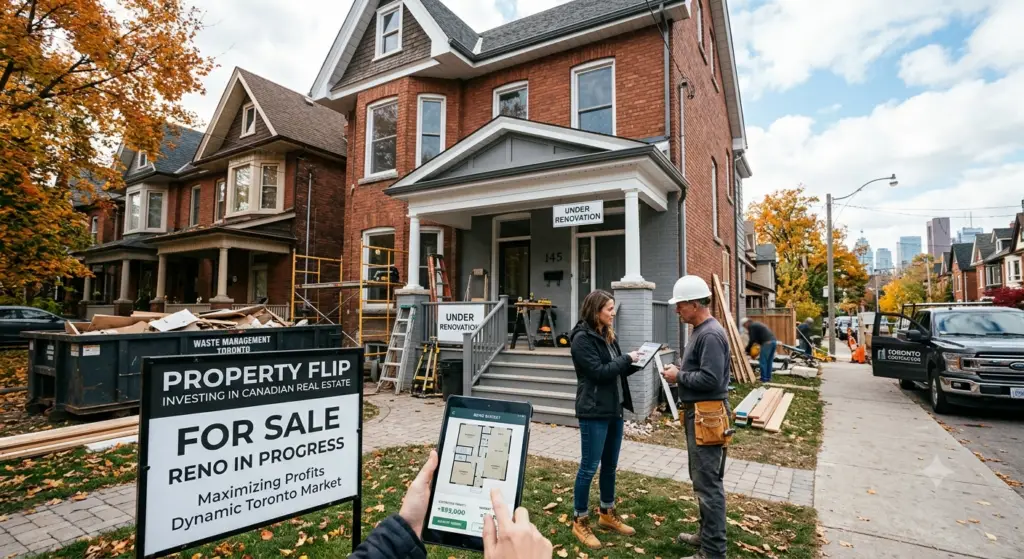
Flipping properties involves purchasing a home below market value, improving it through strategic renovations, and selling it for a profit. Success depends on buying the right property, accurately estimating renovation costs, understanding local market conditions, securing appropriate financing, and complying with the latest CRA tax regulations.
What Is Property Flipping?
Property flipping is a real estate investment strategy where an investor buys a residential property, increases its value through renovations or repairs, and sells it within a relatively short period to earn a profit.
Unlike long-term rental investing, flipping properties focuses on capital appreciation rather than monthly rental income. While the rewards can be significant, successful investors understand that profitability depends on careful planning, financial discipline, and market knowledge.
In recent years, flipping properties has gained popularity across Canada, particularly in Ontario, Alberta, British Columbia, and several growing mid-sized cities. However, with new tax rules, changing interest rates, and evolving buyer expectations, investors must approach every project with a well-defined strategy.
Table of Contents
Why Flipping Properties Is Becoming More Popular in Canada
Canada’s real estate market continues to present opportunities for investors willing to identify undervalued properties and add value through thoughtful renovations.
Several factors contribute to the growing interest in property flipping:
- Rising housing demand in many regions
- Urban redevelopment projects
- Population growth through immigration
- Limited housing inventory
- Demand for renovated move-in-ready homes
- Increased interest from first-time investors
Cities such as Toronto, Ottawa, Hamilton, London, Kitchener-Waterloo, Barrie, Oshawa, Calgary, Edmonton, Halifax, Winnipeg, Regina, Saskatoon, and many smaller communities continue to offer opportunities for investors who carefully analyze local market trends.
Rather than chasing rapidly appreciating markets, experienced investors often focus on neighbourhoods undergoing revitalization, where infrastructure improvements, new schools, transit expansions, and commercial developments can significantly increase future property values.
How Does Property Flipping Work?
A successful property flip generally follows six key stages.
| Stage | Description |
| Research | Identify neighbourhoods with strong growth potential. |
| Purchase | Buy below market value whenever possible. |
| Renovate | Improve the property’s appeal and functionality. |
| Market | Professionally stage and advertise the home. |
| Sell | List at the optimal price based on comparable sales. |
| Profit | Deduct all expenses to determine your actual return. |
Although the process appears straightforward, every stage requires careful planning to avoid reducing your profit margin.
Is Flipping Properties Still Profitable in 2026?
The short answer is yes—but only for well-prepared investors.
Today’s investors face:
- Higher borrowing costs
- Increased renovation expenses
- Longer permitting timelines
- More informed buyers
- Stricter tax regulations
These factors mean that success now depends less on luck and more on accurate budgeting, disciplined project management, and selecting the right property.
Instead of expecting large profits from every project, experienced investors focus on consistent returns while carefully managing risk.
Choosing the Right Property
One of the biggest mistakes beginners make is buying the wrong property.
The ideal flip is usually one that requires cosmetic improvements rather than major structural repairs.
Look for properties with:
- Strong neighbourhood demand
- Good school districts
- Convenient public transportation
- Shopping and healthcare nearby
- Growing employment opportunities
- Safe communities
- Future infrastructure developments
Properties requiring updates to kitchens, bathrooms, flooring, paint, lighting, landscaping, and curb appeal often provide the highest return on investment without excessive renovation costs.
Red Flags to Avoid
Not every bargain is a good investment.
Avoid properties with:
- Foundation movement
- Major structural damage
- Significant mould issues
- Extensive water damage
- Illegal additions
- Poor neighbourhood demand
- Environmental contamination
- Complex zoning restrictions
Unexpected repairs can quickly eliminate potential profits.
Financing Your Property Flip
Choosing the right financing strategy can significantly affect your overall profitability.
Common financing options include:
Conventional Mortgage
Suitable for investors with strong credit and stable income. These loans generally offer lower interest rates but may require larger down payments for investment properties.
Alternative Lenders
Alternative lenders may provide more flexible qualification requirements for self-employed investors or those with unique financial situations.
Private Lenders
Private financing offers faster approvals but usually comes with higher interest rates and fees. Many investors use private funds for short-term acquisitions before refinancing or selling the property.
Home Equity Financing
Existing homeowners often leverage equity through refinancing or a home equity line of credit (HELOC) to finance renovation projects or down payments.
Working with an experienced mortgage professional can help investors compare financing solutions and choose the option that best aligns with their investment strategy.
Budget Before You Buy
One of the most effective ways to protect your investment is by creating a comprehensive budget before purchasing a property.
Your budget should include:
- Purchase price
- Land transfer tax
- Legal fees
- Home inspection
- Mortgage costs
- Renovation expenses
- Building permits
- Utilities
- Insurance
- Property taxes
- Staging
- Marketing
- Real estate commissions
- Closing costs
- Contingency reserve (10–15%)
Many first-time investors underestimate holding costs, which can significantly reduce profits if the property takes longer than expected to sell.
Renovation Strategies That Deliver the Highest Return on Investment (ROI)
One of the biggest factors influencing the success of flipping properties is choosing renovations that add genuine value without overspending. Buyers are willing to pay more for homes that are modern, functional, and move-in ready, but expensive luxury upgrades don’t always translate into higher resale prices.
High-ROI Renovations
| Renovation | Typical ROI | Why It Adds Value |
|---|---|---|
| Kitchen Refresh | High | Modern cabinets, countertops, and fixtures attract buyers. |
| Bathroom Renovation | High | Updated bathrooms significantly improve buyer appeal. |
| Fresh Interior Paint | Very High | Affordable improvement that instantly refreshes a home. |
| New Flooring | High | Luxury vinyl plank and engineered hardwood remain popular. |
| Curb Appeal | High | Landscaping, front doors, and exterior lighting create a strong first impression. |
| Lighting Upgrades | Medium-High | Bright, energy-efficient LED fixtures modernize interiors. |
| Energy-Efficient Windows | Medium | Lower utility costs appeal to buyers. |
Renovations to Avoid
Avoid spending heavily on features that many buyers may not value, such as:
- Luxury home theatres
- High-end custom kitchens beyond neighbourhood standards
- Swimming pools
- Overly personalized décor
- Expensive imported finishes
- Smart home systems that exceed local market expectations
The goal is to renovate according to neighbourhood values, not personal taste.
Understanding CRA Anti-Flipping Tax Rules
Property investors should understand the flipping tax rules before purchasing a property.
Under current Canadian tax legislation, profits from selling a residential property owned for less than 365 days are generally treated as business income rather than a capital gain, unless a qualifying exemption applies. This means the profit is fully taxable and the principal residence exemption generally does not apply in these situations.
CRA Anti-Flipping Tax Exemptions
Certain life events may qualify for an exception, including:
- Death of the homeowner
- Serious illness or disability
- Divorce or separation
- Birth or adoption of a child
- Job relocation
- Involuntary termination of employment
- Personal safety concerns
- Insolvency or financial hardship
- Destruction or expropriation of the property
Because tax situations vary, investors should consult a qualified accountant or tax professional before buying or selling a property.
Mortgage Financing Tips for Property Flippers
Financing plays a critical role in the profitability of a flip.
Consider the following strategies:
- Obtain mortgage pre-approval before searching for properties.
- Compare financing options from banks, credit unions, alternative lenders, and private lenders.
- Keep your credit score strong to access better interest rates.
- Include all financing costs in your investment analysis.
- Maintain a contingency fund for unexpected expenses.
- Review refinancing options if renovations substantially increase the property’s value.
Working with an experienced mortgage professional can help you structure financing that aligns with your investment goals.
Common Mistakes Property Flippers Make
Even experienced investors occasionally make costly mistakes.
1. Paying Too Much
Buying at the wrong price leaves little room for profit.
2. Underestimating Renovation Costs
Unexpected structural repairs, labour shortages, or material price increases can quickly erode margins.
3. Ignoring Holding Costs
Mortgage payments, insurance, utilities, property taxes, and maintenance continue until the property is sold.
4. Skipping Professional Inspections
Hidden defects can significantly increase renovation costs.
5. Over-Renovating
Avoid spending beyond what the local market will support.
6. Poor Project Management
Delays increase carrying costs and reduce profitability.
7. Ignoring Market Trends
Changing buyer preferences, inventory levels, and interest rates affect resale values.
Expert Tips to Maximize Profits
Successful investors consistently follow proven strategies:
- Research neighbourhood trends before purchasing.
- Buy below market value whenever possible.
- Focus on cosmetic renovations with high ROI.
- Obtain multiple contractor quotes.
- Keep renovation timelines realistic.
- Budget an additional 10–15% for unforeseen costs.
- Stage the property professionally.
- Use high-quality photography and virtual tours.
- Price the property based on comparable sales.
- Work with experienced mortgage and real estate professionals.
Property Flipping Checklist
Before purchasing:
☐ Review neighbourhood trends
☐ Obtain financing pre-approval
☐ Estimate renovation costs
☐ Calculate holding expenses
☐ Research comparable property sales
☐ Schedule a professional inspection
☐ Verify zoning and permits
☐ Develop an exit strategy
Before listing:
☐ Complete renovations
☐ Stage the property
☐ Arrange professional photography
☐ Prepare marketing materials
☐ Review pricing strategy
☐ Ensure legal documentation is complete
Key Takeaways
- Property flipping can be profitable when supported by careful planning and disciplined budgeting.
- Selecting the right property is often more important than the renovation itself.
- Focus on improvements that appeal to the widest range of buyers.
- Understand current CRA anti-flipping tax rules before investing.
- Budget for all acquisition, renovation, financing, and selling costs.
- Avoid emotional purchasing decisions and rely on market data.
- Professional financing advice can improve cash flow and overall returns.
Is flipping properties profitable in Canada?
Yes. With proper research, disciplined budgeting, and strategic renovations, flipping properties can generate attractive returns.
What is the best city for flipping properties?
The best opportunities depend on local market conditions. Many investors also find value in smaller and mid-sized cities where competition is lower.
How much money do I need to start?
The required investment varies based on purchase price, down payment, renovation costs, and financing structure.
Do I pay tax when flipping houses?
Yes. Profits may be treated as business income, particularly when properties are sold within a short ownership period. Consult a qualified tax professional for advice specific to your circumstances.
Can first-time investors flip houses?
Yes. Beginners can succeed by starting with smaller projects, assembling an experienced team, and carefully managing risk.
What renovations add the most value?
Kitchen updates, bathroom renovations, fresh paint, new flooring, lighting improvements, and curb appeal enhancements typically provide strong returns.
Should I use private financing?
Private financing can offer flexibility and faster approvals, but it generally comes with higher borrowing costs.
How long should a flip take?
Many projects are completed within six to twelve months, although timelines vary depending on renovations and market conditions.
Is staging worth the cost?
In many markets, professionally staged homes sell faster and often attract stronger offers.
How can a mortgage professional help?
A mortgage professional can help compare lenders, secure competitive financing, and structure borrowing to support your investment strategy.
Conclusion
Flipping properties can be an effective way to build wealth through Canadian real estate, but success requires more than finding a discounted home. Investors who conduct thorough market research, secure appropriate financing, manage renovation costs carefully, and understand current tax obligations are better positioned to achieve consistent results.
Whether you’re purchasing your first investment property or expanding an existing portfolio, having knowledgeable professionals—including a mortgage expert, real estate agent, contractor, lawyer, and accountant—can help reduce risk and improve your chances of success.
If you’re considering financing a property flip in Ontario or anywhere in Canada, I can help you explore mortgage solutions tailored to your investment goals and connect you with lenders that understand real estate investing.
Ready to Start Your Next Property Flip?
Whether you’re a first-time investor or an experienced property flipper, choosing the right financing can make all the difference.
Contact Satish Kumar, Mortgage Agent Level 2, Mortgage Architects, for personalized guidance on financing investment properties, refinancing, private lending, and mortgage strategies designed to help you maximize returns.
Book your FREE mortgage consultation today and take the next step toward building your real estate investment portfolio.